Saturday, October 5, 2019

Thursday, November 15, 2018
Early Winter
 |
| View of Skaneateles Lake looking south from boat launch. |
Early Winterscape in Skaneateles
Here in the Finger Lakes we were 'blessed' with an early snow storm. A few years back I took these pictures when in November, when we got a dusting. When it snows here, the skies are gloomy, filled with moisture. I was having a hard time getting just the right shots. For three days in a row during the Thanksgiving break I woke each morning at the required time for this season of the year (7 am) and it was always overcast.
One morning I got lucky enough to capture the sun rising in the gloom, and paid for it with a nasty fall on the ice as I took a picture from the town of Skaneateles' boat launch.
Then it happened. The perfect-picture-taking-dawn. I arose at 7 am and the sun was rising with just wisps of clouds in the sky, and magically, it had also snowed overnight. I grabbed my coffee, my camera and my boots and waded through the newly fallen snow in the farms fields at the end of my road. And I was rewarded with crystal images.
 |
| Sun rising on farm field of corn stalks. |
So, it was worth it - waiting - for the right moment in time to take the pictures that would capture the beauty of this landscape that I live in; that shows itself when it wants, not when you need it to. A lesson well worth remembering when the days get shorter and the darkness sets in. A lesson to keep in mind in general.


Wednesday, November 14, 2018
Ephemeral Summer

There is nothing like the feeling of accomplishing something; especially when it is a labor of love. That is how I feel about my novel Ephemeral Summer. So I was especially pleased when I received an email from a women's book club in Twin Cities of Minnesota who are coming to the Finger Lakes region and want to meet and speak with me about my novel.
Ephemeral Summer is a coming of age story about a young woman named Emalee who loses both parents die when she is 15. After the tragedy she is sent to live with her Aunt Audrey who summers at the family camp on Canandaigua Lake in Upstate New York. Emalee is beset with the usual problems of a young woman, but her familial relationships and 'lake friends' make her life even more trying. In her twentieth year she falls in love with a young intellectual philosopher named Stuart, whom she can't seem to get over even after years away from him and the lake setting where they met.
Although this is a love story, Ephemeral Summer is also about the wonders of the natural world. Starting in the Finger Lakes region and ending there, this story takes the reader from the shores of Canandaigua, Seneca, and Erie, to the Canadian wilderness where Emalee finds herself tracking Moose as part of a research project in Algonquin Provincial Park.
I wrote and edited this book (with the help of many people) over the course of a few years. My purpose was to educate about this great place - the Finger Lakes - in which we live; and to entertain. I hope I have done both. And I hope you will enjoy reading Ephemeral Summer.
Saturday, January 14, 2017
Tracking Stories in the Algonquin Wilderness
 |
| Jack Pine by Tom Thomson Source: Wikimedia |
Writing placed-based literature is a great experience because there are always stories embedded in the culture of an area that a writer can use as a springboard.
When I wrote Ephemeral Summer I placed my college-age protagonist, Emalee, in settings that were familiar to me. She attends colleges in the Finger Lakes region of Upstate New York because I know the area well. However, like most college-age students she moves around, and in the last chapter, she visits the Canadian wilderness to assist a fellow graduate student track moose in Algonquin Provincial Park in Canada.
Although I had stayed in Algonquin twice myself during graduate school (tracking moose), my research on Algonquin went beyond the ecological setting and into the realm of art. While conducting my research I was surfing the Internet for information about the Northern Lights to include in the novel, and stumbled upon the artwork of Tom Thomson, (1877-1917) an artist from the early 1900s who painted landscapes in Algonquin.
 |
| The Northern Lights by Tom Thompson |
Thomson first visited Algonquin in 1912 and fell in love with the place. He stayed, found jobs as a ranger, firefighter and any other occupation that the woods would allow, and painted in his spare time. His paintings are considered the forerunner of a movement of painters called The Group of Seven: a group of Canadian landscape painters who spent considerable time painting in Algonquin from the 1920s-1930s.
As I delved into his story I found parallels to my plot. There is an accidental death by drowning in my story Ephemeral Summer, and Thomson likewise drowned under mysterious circumstances. In 1917, at age 40, he went out canoeing and was found dead a week later. Foul play was suspected but never confirmed.
Like many artists, Thomson did not make a lot of money on his works. Although he did have a patron, and some of his works sold, he became more popular after his death.
And that is what is most intriguing about Thomson: his drive to create art whether it sold or not. His story folded neatly into my narrative for Ephemeral Summer. Indeed, for many artists, who create for art's sake, because they feel compelled.
Tuesday, June 14, 2016
Weather in the Finger Lakes
Let’s Talk About the Weather
Because it dictates our moods
I
like to describe the weather when I’m writing a scene in my novels.
Maybe it’s because I’m from Upstate New York where we can experience
summer and fall in one week (literally). But it’s also because the
weather is what everyone talks about around here.
The
weather dictates our moods, our conversations, what we do on a
day-to-day basis. I planned to mow the lawn today, can’t do it — it’s
raining. I wanted to go for a swim in the lake — too cold. I was going
to paint the deck today, no can-do — the wind is too strong and it’s
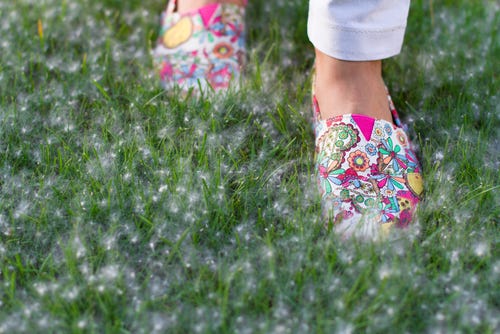
blowing all the cottonwood seeds around and it almost appears like it’s
snowing outside.
A
standard joke for Upstate weather? A sunny day is called cloud failure.
Yes, because of all the lakes around her (Great Lakes and Finger
Lakes), the skies are gray a majority of the time. And that definitely dictates one’s mood.
You
can’t go anywhere without having or hearing a conversation about the
weather. As in “Can you believe this weather?” which could mean, it’s
been sunny and dry and 80 degrees F for the past week or, it’s been
cool, rainy and in the 40s. It doesn’t matter, we Upstaters never seem
to want to believe the weather is doing what it’s doing to us.
And
in my household when we turn on the local news after dinner, what’s the
reason? Not to watch what’s happening in the Presidential elections,
it’s you-guessed-it, to get the weather forecast.
Weather it seems, is so much part of our lives, like waking up, eating, or going to work.
I
hadn’t thought much about this until recently when I noticed my mood
shifting into a somber mode and had to figure out why. The weather was
clear, the days were sunny, I had nothing to worry or complain about
(well sort of, we all have something to worry or complain about — that
is a human condition). And then I realized it was the change of seasons.
The days were getting longer, the sun was rising earlier, and the birds
were singing their hearts out. It was spring going on summer. One would
think it would be a time of joy for me, so why the dark moods?

We in
Upstate wait months for summer to arrive.
Maybe
I thought, the feeling is like a holiday I’ve been waiting and
preparing for. You anticipate and plan and then when it comes it’s never
exactly as you predicted. And you regroup and tell yourself, live in
the now. Stop thinking about what the weather is going to be like
tomorrow.
Sunday, April 26, 2015
Ephemeral Seasons
 |
| In the wildflower garden at Baltimore Woods, NY. |
Bloodroot has an interesting history. It gets its common name from the red root of the plant that was once used by Native Americans as a dye. It also has many medicinal uses, well know by Native Americans and discovered by the colonists. It was once used as a tonic, cough medicine, and the mashed roots were used as a skin ointment.
I mention bloodroot and some other spring wildflowers in my latest novel: Imaginary Brightness: a Durant Family Saga. Because the main storyline is set in the Adirondacks I wanted to include local lore about the woods. Although my editor told me to simmer it down a bit (this is not a forum to educate about the environment!) I threw in as many tidbits as I could. Indeed, the natives in the region, called the Algonquins, and then later the Mohawks, and other tribes that traversed through the Adirondacks, used many of the wild plants and especially tree parts such as bark for their tinctures, sweeteners, and food. I decided that since I was writing about history, the plants had their place in the story as well.
 |
| View of the sky in Baltimore Woods on a spring day. |
Saturday, November 8, 2014
Life in Finger Lakes Magazine
 Thank you to Life in the Finger Lakes Magazine for publishing a review of my book Ephemeral Summer in their Winter 2014 edition. "The author, ..., has crafted an engaging first novel with appealing multigenerational characters and provocative plot twists." Laurel C. Wemmett. For the full review visit: http://bit.ly/1xutoO2
To purchase the book visit http://amzn.to/1xgi495
Tuesday, October 28, 2014
Why Wine in the Finger Lakes?
 |
| Map drawn in 1779 by Revolutionary War scout showing the locations of the Cayuga and Seneca settlements during the Sullivan/Clinton campaign. |
What is interesting about the map, and what I reference in my novel, is the number of orchards present at the time. The Native Americans understood that the lakes provided an ideal climate for fruit bearing trees and vines. Besides the longhouse dwellings shown as red rectangles, one can see the abundance of orchards dotting the landscape.
Indeed, diaries of the soldiers that took part in this scorched earth campaign recount the number of trees they girdled and bushels of grain they set fire to. In one entry a soldier recounts his arrival at the Seneca Nation capital of 'Cannondesago' near Geneva, NY.
at Cannondesago the chief Cinnakee
castle about dusk,where we found about 80 houses somthing large
some of them built with hew? timber & part with round timber and part
with bark. Large quantities of corn and beans with all sorts of sauce,
at this place a fine Young Orchard, which was soon all girdled
The Finger Lakes region was a confluence of Native American settlement and agricultural production. The lakes provide a moderating influence on the temperatures and climate of the region making it an ideal location for fruit-bearing trees and vines. Water has a high heat capacity meaning, once lakes such as Seneca and Cayuga heat up it takes a long time for them to cool down. This works to the advantage of fruit production. In the spring, the cooler air around the lakes delays budding which then prevents damage from a killing late spring frost. In the fall, the lakes give off the heat they have been storing slowly all summer, which prolongs the harvest season for the fruit.
 |
| A tourist enjoying the bounty that the Finger Lakes has to offer. |
Sunday, October 12, 2014
A Perfect Wedding Day at Clark Reservation
Columbus Day weekend. Peak season to check out the foliage of the deciduous trees that grace our landscape in Upstate New York. I asked my husband, "Would you like to go to the Adirondacks tomorrow and take a hike in the mountains?"
He gave me a blank expression that I interpreted as a no.
 So instead, we got up early on this bright Sunday morning and drove about 20 minutes away to see a landscape that matches any vista in the Adirondack Mountains: Clark Reservation located in Jamesville, NY. As you can see from the picture, the major attraction at the park is the plunge basin lake, formed at the bottom of an ancient waterfall that was a result of the glacial ice melt about 10,000 years ago.
 But there is even more history to see at the park: the fossils of sea creatures carved into the limestone pathways along the basin are testament to the fact that millions of years ago this part of the world was the bottom of a shallow sea.
 I wasn't really thinking about all of this history however as I walked. Instead I was just in awe with the numerous cedars carving spectacular sculptures into the soil with their gnarled roots. And the rich palette of colors that the maples provided for my soul. And the loud swishing noise that greeted my ears over and over as Canada geese flew into the lake from the bright blue skies above - seeking refuge I assume from the waterfowl hunters in the surrounding fields.
I will just store these memories away with me whenever I am feeling down or sorry for my self. Because I was physically able to hike into the basin, and hike back up (yes, we had to climb those limestone steps to get back to the car). When I got to the top I was also delighted to see that someone was planning on getting married today, and they had perfect weather. Good luck to you both - the anonymous couple that got married today. I hope when you come back to the park each year to celebrate, the weather cooperates and you get the same view that graced your ceremony today.

He gave me a blank expression that I interpreted as a no.
So instead, we got up early on this bright Sunday morning and drove about 20 minutes away to see a landscape that matches any vista in the Adirondack Mountains: Clark Reservation located in Jamesville, NY. As you can see from the picture, the major attraction at the park is the plunge basin lake, formed at the bottom of an ancient waterfall that was a result of the glacial ice melt about 10,000 years ago.But there is even more history to see at the park: the fossils of sea creatures carved into the limestone pathways along the basin are testament to the fact that millions of years ago this part of the world was the bottom of a shallow sea.I wasn't really thinking about all of this history however as I walked. Instead I was just in awe with the numerous cedars carving spectacular sculptures into the soil with their gnarled roots. And the rich palette of colors that the maples provided for my soul. And the loud swishing noise that greeted my ears over and over as Canada geese flew into the lake from the bright blue skies above - seeking refuge I assume from the waterfowl hunters in the surrounding fields.I will just store these memories away with me whenever I am feeling down or sorry for my self. Because I was physically able to hike into the basin, and hike back up (yes, we had to climb those limestone steps to get back to the car). When I got to the top I was also delighted to see that someone was planning on getting married today, and they had perfect weather. Good luck to you both - the anonymous couple that got married today. I hope when you come back to the park each year to celebrate, the weather cooperates and you get the same view that graced your ceremony today.

Tuesday, June 17, 2014
Chladophora in Skaneateles Lake
Like green mermaid hair, the algae appears almost feathery when viewed from a paddle board. Pick it up in your hands though and it feels and looks like green snot. This should make it easy to distinguish from Chara - another algae that clings to rocks. Chara feels like shag carpeting when you walk on top of it and it does not tend to disengage from the rocks and wash up on shore.
I am not sure what it is. I don't think Chladophora has ever been a problem on Skaneateles Lake. At least I have never noticed it reach nuisance levels in the ten or so years that I have been swimming near shore. We will just have to wait and see.
On the plus side - a mayfly landed on my swimming partner today. They must be hatching. The cycle begins again.
Tuesday, October 15, 2013
Succession
 |
| Beaver dam at Baltimore Woods |
What made the field trip with my students so worthwhile is that we were able to view a beaver meadow -- the remnants of an abandoned beaver dam -- and just downstream from there a newly built beaver pond. It was a perfect lesson in succession, the changes in a landscape over time due to physical or biological interventions. In this case, the beaver is the intervener.
Beavers set up home once they build their dam and ensure a pond environment that will protect them over the winter months and provide them with a place to store their cache of twigs for food. After the dam is built they work on building a home where they can raise their kits, or litter of young. After a few years if the host of trees available for consumption dwindles they move on to a new site downstream, like they have done at Baltimore Woods.
What they leave behind is a legacy of a meadow, and a new generation of plants that would have never appeared if it hadn't been for their work.
Sunday, September 1, 2013
End of Summer
 This summer was special for me. I took off from work, and, among other ventures, spent the summer looking for invasive aquatic plants in the lake. My search ended this weekend when, my husband and I canoed the southern end of Skaneateles Lake looking in the stream inlets for Hydrilla, an invasive species recently discovered in Cayuga Lake. This plant is an aggressive invader that chokes out other native species and spreads prolifically.
We didn't find any Hydrilla but we did see a Bald Eagle perched on a tree branch, oblivious to the jet skis that were motoring all about. Then, suddenly, we heard what sounded like a waterfall. We stopped to pinpoint the noise and noticed that across the lake a rain shower was heading right towards us. We quickly paddled under the nearest Willow tree for cover, but were drenched anyway.
Summer in Upstate New York is ephemeral, and pretty; I hate to see it end.
I also spent weeks swimming with friends. We would meet in the morning and swim a 1/2 mile- 1 mile a couple of times a week in the lake. We got to know all of the moods of the water. I have done this training for the past eight years. Each year we mark the passage of summer by swimming a mile with over 200 other people in the annual Skanraces - Escape from the Judge - race event. This morning as we jumped off the Judge Ben Wiles at 8 am. The skies were cloudy, the water calm. The only waves were those stirred up by the hundreds of swimmers. I thought about how all of the swimming and training over the summer pays off, and what a joy to finally be done with it. Now though, I sit and think, I wouldn't mind it if summer lasted a bit longer. I am not ready to let it go.
This summer, I also accomplished something I always wanted to do: I wrote a book. It is set in the Finger Lakes, a coming of age story about a young woman (Emalee Rawlings) who, after the tragic death of her parents in an apparent murder/suicide, navigates her way through adolescence to adulthood. What she experiences is something we all know well, that people and places we encounter throughout life change the way we think. The book follows Emalee from her home in Canandiagua Lake, to college at Hobart and William Smith on Seneca Lake, and finally to the wilderness of Algonquin Provincial park in Canada. It is a testament to the beauty of wild places and the importance of protecting them. My goal in writing the book was to educate and entertain. It is appropriately enough called, 'Ephemeral Summer'. Look for it next spring, I can't wait until until then.
Friday, June 28, 2013
Mayfly Hatch
 The mayflies (Ephemeroptera) are out. I was watching them the other night by the lake. They have recently hatched after spending their young lives under water as nymphs. When they first come to the surface, they have wings but do not fly yet, they are commonly called duns by fishermen, this is their subimago state. They shed one last time and can use their wings to fly, the imago state, which means they are ready to mate. Mayfly nymphs have gills to breath under water, and can take up to a year to go through what is called incomplete metamorphosis as they molt their exoskeletons. This may happen 20-40 times depending on the species.
 These episodes of life stages are called instars. After the last instar, they climb out of the water and rest until they complete their final molt and begin to fly. At this last stage of their life they do not have mouth parts, their only purpose is to mate. They do this in a courtship dance above the water.
The males swing up and down in the air, looking for a mate.
I saw several mating in the air, clinging to each other in flight. After this ritual, the males go off to the nearest tree limb, lamppost or rock and die. The females go to the water to lay their eggs and then die on the surface. On the lake it looks like a soft rain is falling when you watch hundreds of the female mayflies dipping their bottoms where the eggs are stored, into the water.
Mayflies need clean, well oxygenated water to survive their youth. You find them around lakes and streams where the water is not polluted. They thrive around Skaneateles Lake and are a treasure to see each year.
Friday, February 1, 2013
Growing Vegtables in the Winter
I work at a community college in the Finger Lakes: Cayuga Community College. We have two campuses, one in Auburn, NY and one in Fulton NY. Both experience heavy snowfall, and lately, it has been very cold. But while the temperature outside hit 9 degrees Fahrenheit last week, the temperature inside our High Tunnel Greenhouse was a balmy 40 degrees. The soil was 38 degrees. This greenhouse, built with grant funds from the Walmart Corporation, is a collaborative project the college is undertaking with a local agency called the Cayuga/Seneca Action Agency. The food grown in the greenhouse will be donated to a local food pantry. We are growing shallots, garlic, and bok choy and they are sprouting! Here is a picture taken in January 2013.


Thursday, February 16, 2012
Visiting the Finger Lakes Tourist Hotspots
Yesterday I went with a group of students from Cayuga Community College to visit three sites in Cayuga County that are tourist destinations. We first visited the William Seward House, named after the Senator and Diplomat that served New York State and the Nation before and after the Civil War. Seward is most fondly remembered for "Seward's Folly" the purchase of Alaska from Russia while he was a Secretary of State under Andrew Johnson. The Seward House is his residence in Auburn NY, donated by the family to the Emerson Foundation in 1951. It contains many if not most of the original furnishings from his life-time, including a gallery of pictures of diplomats from around the world. It is definitely worth the trip to Auburn!
From there, we drove to Aurora, NY to have lunch at the Aurora Inn. This beautifully restored Inn in the heart of small-town Aurora is charming and the food was fabulous! The views of the Cayuga Lake are remarkable. The Inn is hosting many interesting events, trying to lure more people to the area to learn about the good wine and food grown locally in the Finger Lakes.
Finally, we ended our trip with a visit to Mackenzie-Childs. This world-famous home decor production company has hand-crafted fine pottery that makes one "smile". Really, that is how our tour guide referred to the goods there, and he was right. The whimsical designs are one-of-a-kind. I personally do not own much of their wares but know many people that collect Mackenzie-Childs.
I realized after the trip what a wonderful place we call home here in the Finger Lakes. Where small towns can reclaim their heritage and offer such hospitality to outsiders.
From there, we drove to Aurora, NY to have lunch at the Aurora Inn. This beautifully restored Inn in the heart of small-town Aurora is charming and the food was fabulous! The views of the Cayuga Lake are remarkable. The Inn is hosting many interesting events, trying to lure more people to the area to learn about the good wine and food grown locally in the Finger Lakes.
Finally, we ended our trip with a visit to Mackenzie-Childs. This world-famous home decor production company has hand-crafted fine pottery that makes one "smile". Really, that is how our tour guide referred to the goods there, and he was right. The whimsical designs are one-of-a-kind. I personally do not own much of their wares but know many people that collect Mackenzie-Childs.
I realized after the trip what a wonderful place we call home here in the Finger Lakes. Where small towns can reclaim their heritage and offer such hospitality to outsiders.
Tuesday, September 20, 2011
El Clima
We recently welcomed a Rotary Exchange student from Venezuela into our home. Her English is limited so it has been a challenge to hold conversations. I must say though that she is really trying and it is a delight to speak with her and realize how new and different our local environment is compared to Venezuela.
As we were walking one day she pointed to the sky and said the clima (pronounced cleema) is very fresh! She told me in her broken English how in Venezuela the sky is polluted and very, very hot. Even more impressive to her was that we drink the water from our lake and even swim in it! It made me realize how lucky we really are. Then she asked me about the "ice in a cup" that comes at Christmas. I had no idea until my daughter pointed out later that she was talking about snow globes, and asking me what the name was for the "ice in a cup", or snow. She is so excited for the snow to come! She has no idea that once it comes it stays for at least four months!
As we were walking one day she pointed to the sky and said the clima (pronounced cleema) is very fresh! She told me in her broken English how in Venezuela the sky is polluted and very, very hot. Even more impressive to her was that we drink the water from our lake and even swim in it! It made me realize how lucky we really are. Then she asked me about the "ice in a cup" that comes at Christmas. I had no idea until my daughter pointed out later that she was talking about snow globes, and asking me what the name was for the "ice in a cup", or snow. She is so excited for the snow to come! She has no idea that once it comes it stays for at least four months!
Tuesday, March 15, 2011
Glass Castles Author Coming to Auburn
share
I have been in a book club for over 12 years now and have read two of Jeannette Walls books: Glass Castles and Half Broke Horses. Each book invoked intense discussions about family, obligations, and quality of life. They are wonderful accounts of her family and her life. Glass Castles is an especially moving story of what it was like for her to grow up in poverty- literally starving all of the time. I encouraged both of my daughters to read her book so that they could appreciate how much they really have. Books like these remind me as a parent that there are three things that I am ethically required to provide to my children to ensure that they grow up to be decent human beings: love, food, and shelter. As Jeannette's brother states at the end of the book, it is really that simple.
I have been in a book club for over 12 years now and have read two of Jeannette Walls books: Glass Castles and Half Broke Horses. Each book invoked intense discussions about family, obligations, and quality of life. They are wonderful accounts of her family and her life. Glass Castles is an especially moving story of what it was like for her to grow up in poverty- literally starving all of the time. I encouraged both of my daughters to read her book so that they could appreciate how much they really have. Books like these remind me as a parent that there are three things that I am ethically required to provide to my children to ensure that they grow up to be decent human beings: love, food, and shelter. As Jeannette's brother states at the end of the book, it is really that simple.
Friday, February 18, 2011
Snow Geese
I have lived in Upstate New York for quite a while now and it has not been until the past few years that I have noticed snow geese. I was passing through Montezuma on my way to work today when I saw a gaggle of geese flying by. On the lakes they look like a floating iceberg. Suddenly, that iceberg moves and what a surprise!
I guess snow geese have become quite abundant over the past decade. Their numbers have increased from 500,000 in the 1970's to over 1 million now. They make their way from the arctic to New Jersey and Maryland via the Atlantic flyway - passing through the Finger Lakes region along the way. The reasons given on the New York DEC web page for their increased numbers is better food supplies, restrictions on hunting, and consequently increased reproductive success rates. I think they are beautiful.

I guess snow geese have become quite abundant over the past decade. Their numbers have increased from 500,000 in the 1970's to over 1 million now. They make their way from the arctic to New Jersey and Maryland via the Atlantic flyway - passing through the Finger Lakes region along the way. The reasons given on the New York DEC web page for their increased numbers is better food supplies, restrictions on hunting, and consequently increased reproductive success rates. I think they are beautiful.

Friday, January 21, 2011
Why I Live Here

Why do I live here? That is a good question given that tomorrow they are predicting a high of 3 degrees Fahrenheit. I answered my friend, "I don't know". But really I do. I know when I go out my back door and head to the farm fields behind our development to cross country ski and see the bright blue skies and the sunlight glittering on the snow like a crystal chandelier. I know when I swim in the summer in water so calm and with a temperate so non-existent that you feel like you are swimming in nothing, as if your body is just gliding along without any resistance. I know when I walk in the woods that are so plentiful around here and feel all of my senses come alive to the sounds of water, birds, and air.
It may be that wherever we live, we all share similar experiences and a sense of place. For me, I have decided that this is the place I want to experience.
Subscribe to:
Posts (Atom)